

Location
562 Waterloo st,
London, ON, N6B 2P9
Our Hours
Mon, Tues, Thurs and Fri 8:30 am to 5:00 pm
Wed : 8:30 am to 4:00 pm
Our Hours
Mon - Fri
8:30 am to 5:00 pm
Contact us
(519) 601- 3636
Root Canal
Root canal treatment in London, Ontario
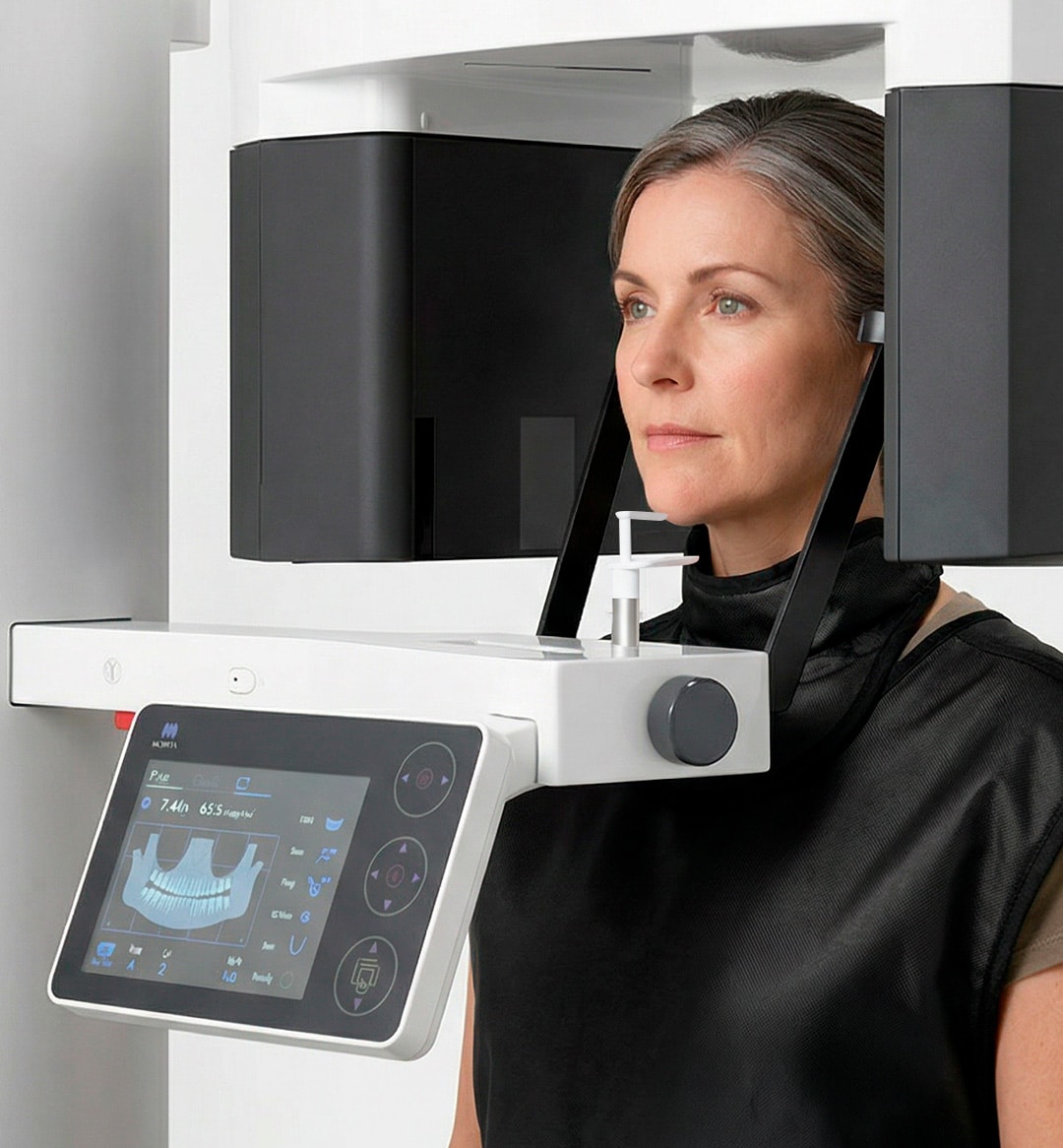
At 562 Endodontics, we offer root canal treatment and endodontic care in London, Ontario. We use an operating microscope for enhanced visualization and precision, and in-house CBCT imaging when needed for accurate diagnosis and treatment planning.
For complex cases, referral to a specialized endodontic practice may be recommended.
When Dentists Refer Patients for Root Canal Treatment
According to the AAE, many clinical scenarios may require referral. Early assessment supports timely diagnosis and treatment planning. Please consider referral in the following situations:
Calcified or sclerosed canals | Requires ultrasonic troughing and microscope-guided access to locate canals without perforation risk |
Suspected MB2, middle mesial, or other extra canals | In maxillary first molars, MB2 detection rises from 17% without magnification to 63% with loupes and 71% with a microscope; unaided vision identifies significantly fewer canals than either magnification modality (Buhrley et al., J Endod 2002;28:324–7) |
Root curvature > 25° or dilaceration | Elevated risk of procedural accident without dedicated rotary systems and microscope-guided negotiation |
Previous procedural complications | Teeth presenting with ledges, canal transportation, or separated instruments often require ultrasonic retrieval techniques and microscope-guided management to complete treatment safely. |
Complex Canal Anatomy or developmental anomalies | Teeth with complex anatomy may require CBCT imaging to map the canal system accurately before instrumentation. |
Persistent Apical Periodontitis | When symptoms or infection persist despite previous treatment, CBCT imaging can help determine the cause of the disease and guide retreatment or surgical endodontic management. |
Restorative context: teeth used as bridge abutments or with full-coverage restorations where high-endodontic quality is critical.
Patient factors: high dental anxiety, medically complex cases requiring efficient procedures, or patients who prefer treatment in a referral-based endodontic setting.
Root Canal Treatment Protocol at 562 endodontics
At 562 Endodontics, we use advanced technologies to ensure accurate diagnosis and treatment planning for a wide range of cases. Our goal is to provide efficient, safe, and comfortable care for referred patients.
Pre-operative Assessment
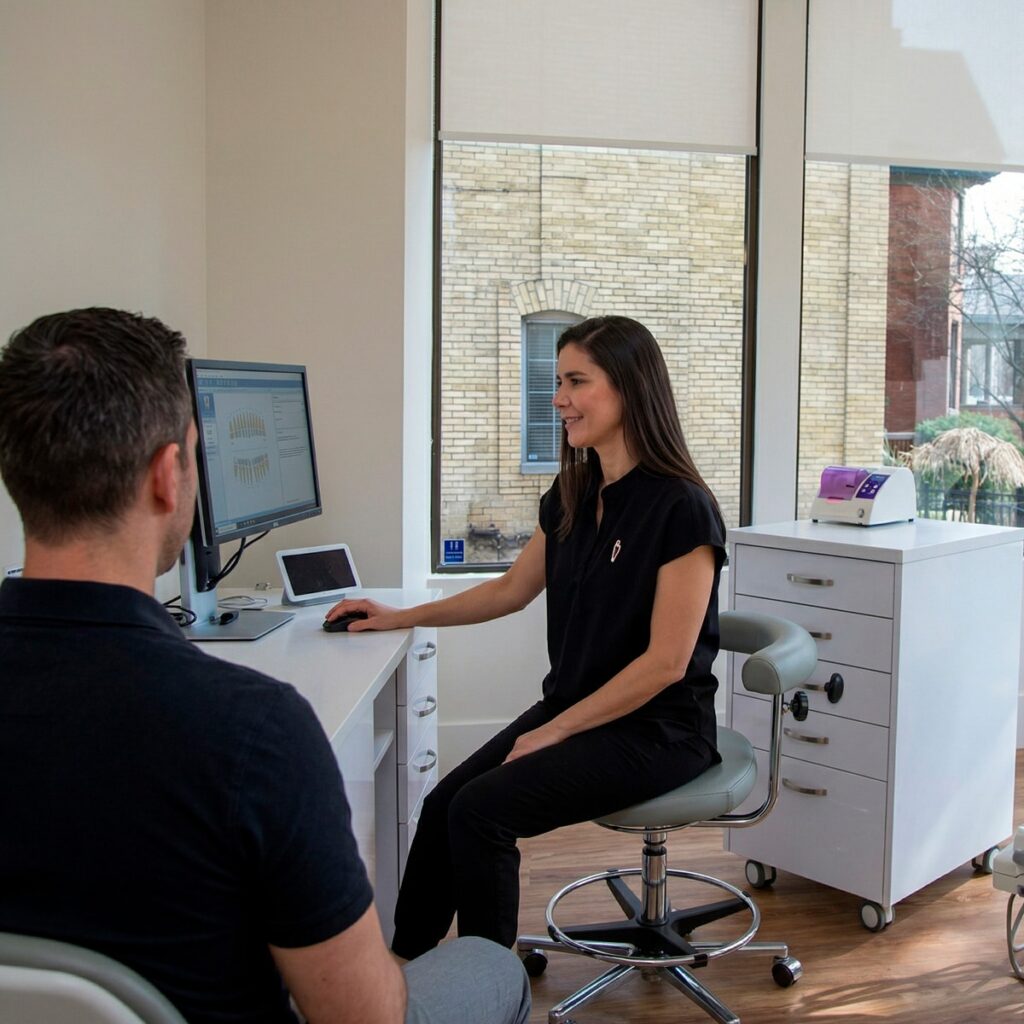
All referrals begin with a dedicated consultation. We perform a clinical examination, review radiographs, and use CBCT imaging when indicated for a three-dimensional assessment. Diagnosis, canal anatomy, and sedation needs are evaluated, and a treatment plan is established before the patient leaves.

Microscope-Guided Access and Canal Location
Treatment is performed using an operating microscope for enhanced visualization. This enables precise access preparation and helps identify additional, narrow, or calcified canals when present.
Chemo-Mechanical Preparation
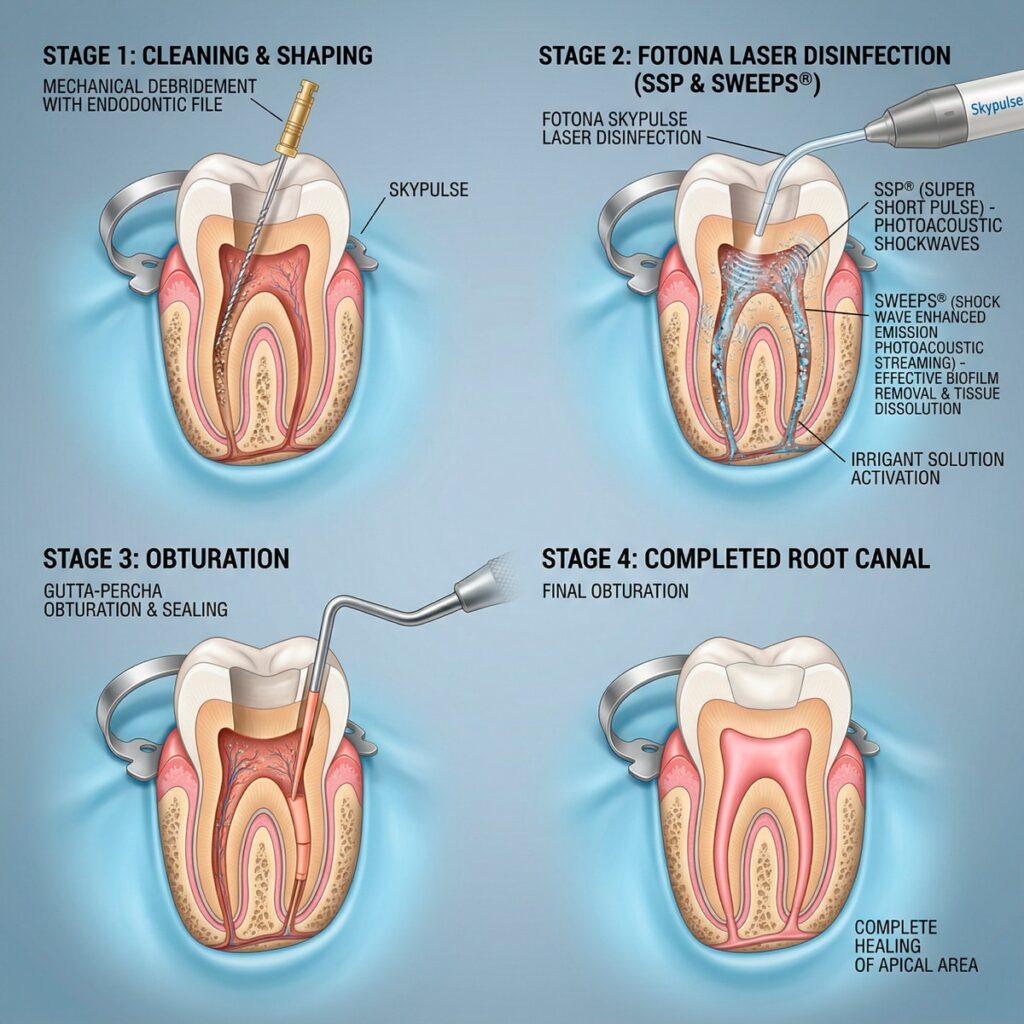
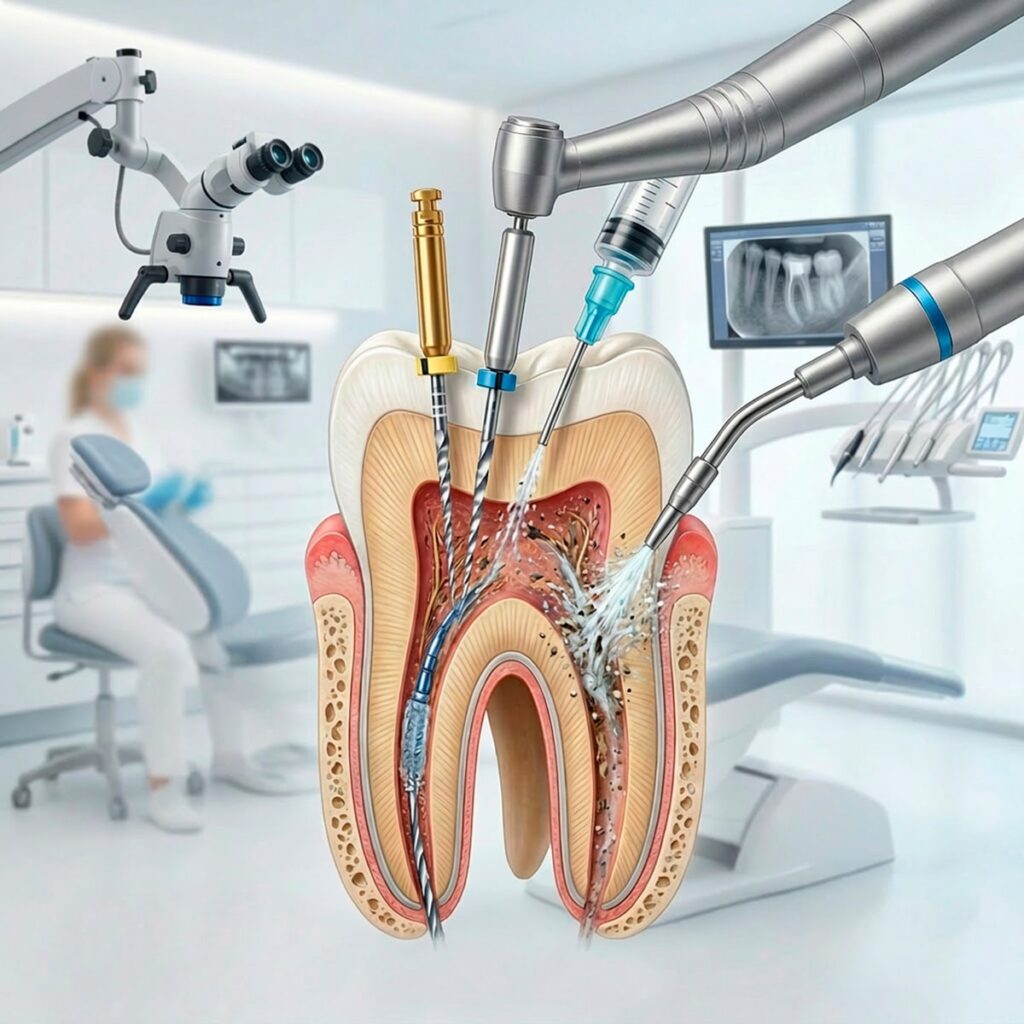
Rotary and reciprocating nickel-titanium systems are chosen based on each case. Canal disinfection is achieved through irrigation, which may be enhanced with passive ultrasonic irrigation (PUI), Fotona SWEEPS®, or GentleWave® technology as needed.
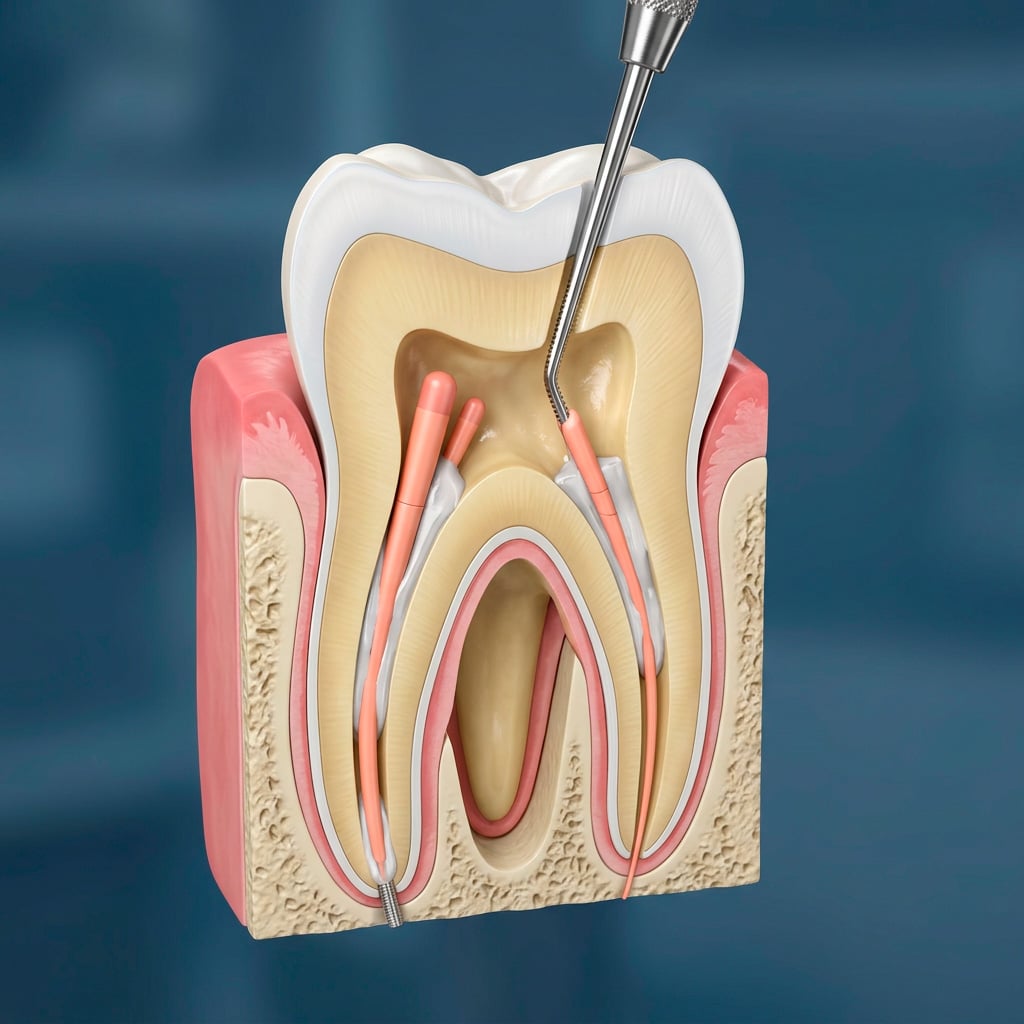
Obturation
Canals are filled using techniques and sealer materials tailored to each case.
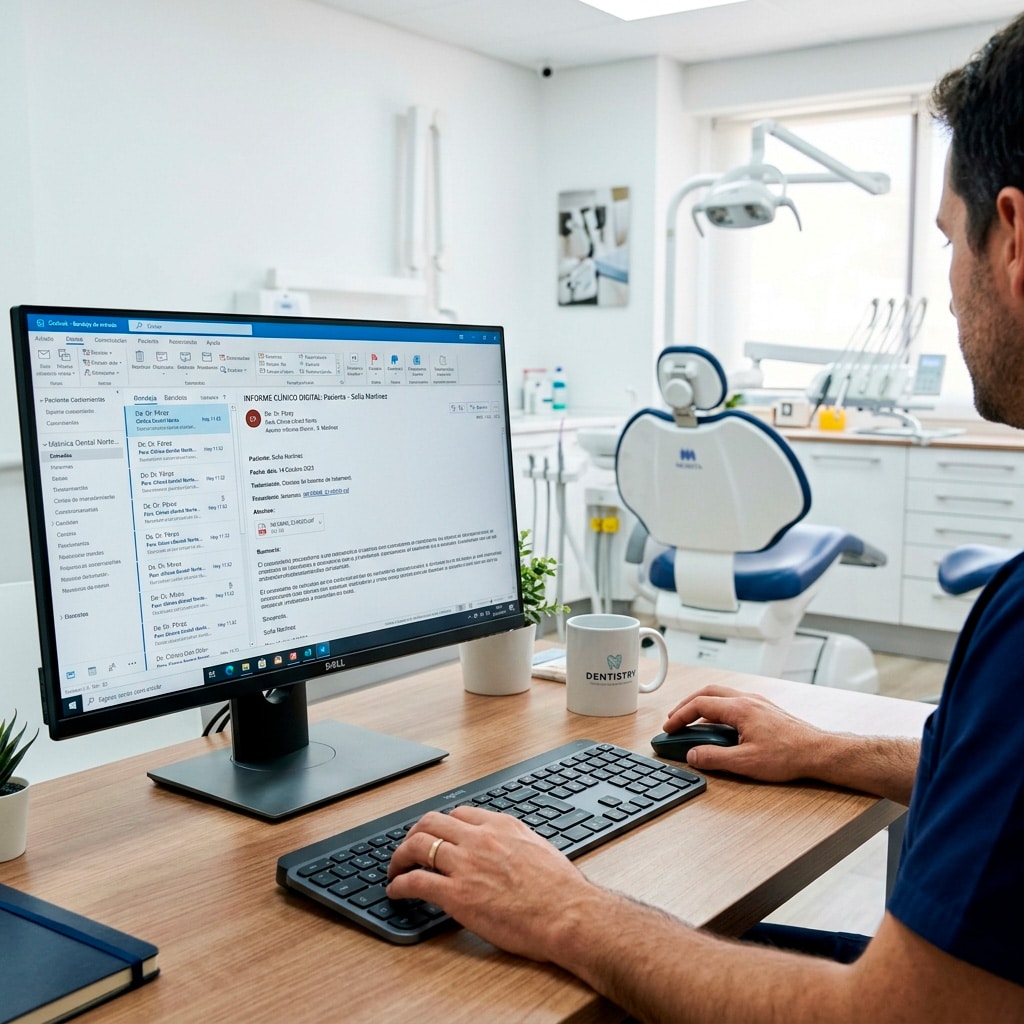
Post-Treatment Communication
After each appointment, a clinical report is sent to the referring office. Most patients return to their general dentist for final restoration and routine follow-up care. Reassessment is available if concerns arise during or after treatment.
Root Canal Treatment and Tooth Preservation
When a tooth is structurally restorable and periodontal support is adequate, preservation of the natural tooth is often the preferred option. The goal of endodontic treatment is to preserve natural teeth, allowing patients to continue chewing comfortably and maintain normal oral function.
Current evidence supports preserving restorable teeth with endodontic treatment. Extraction and implant placement are considered when a tooth is non-restorable, fractured, or has a poor prognosis.
The AAE position on tooth retention supports preservation of the natural tooth when it is restorable, and the endodontic prognosis is favourable.
Extraction may involve surgical risks, extended healing, implant-related costs, and permanent loss of the natural periodontal ligament and its proprioceptive function.
A Guide to Your Endodontic Visit
Consultation | Includes a CBCT scan. Diagnosis, treatment plan, fees, and questions are addressed before any treatment begins |
Appointment length | 60 to 90 min |
Anaesthesia | Thorough local anaesthesia. |
Sedationn | Minimal conscious sedation using nitrous oxide or oral medication, as well as moderate IV or oral sedation, is available for patients with dental anxiety. Sedation options are reviewed and arranged during the consultation appointment. |
Post-operative discomfort | Mild in most cases, managed with scheduled ibuprofen/acetaminophen for 24 to 48 hours |
Return to work | Same day for most patients |
Return to referring dentist | Final restoration recommended within 4 to 6 weeks of treatment completion |
Frequently asked questions
How do I refer my patient to 562 endodontics?
Referrals can be made through the online referral form, CDANet, by email at info@562endodontics.com, or by phone at (519) 601- 3636. Urgent cases are usually seen the same day or within 24–48 hours.
Will a 3D CBCT scan be taken at my consultation?
If indicated, a CBCT scan may be taken during the consultation. This three-dimensional imaging provides detailed views of the tooth and surrounding structures, allowing for more precise diagnosis and treatment planning than conventional radiographs.
Will the referring dentist receive a report after treatment?
Yes. Each case generates a clinical summary, including post-operative radiographs.
What if the case is more complex than expected?
If consultation findings significantly change the treatment plan, the endodontist will contact the referring dentist before proceeding.
Give your patients exceptional endodontic care
At 562 endodontics we are committed to helping each patient with their dental health and well-being through personalized diagnosis and procedures. We strive to make their experience as comfortable and stress-free as possible while delivering the highest quality care available.
For urgent dental trauma:
• Call 562 endodontics at (519) 601-3636
• Email: info@562endodontics.com
• Online referral form at: 562endodontics.com
We are located at 562 Waterloo Street, London, Ontario. Dedicated patient parking is available behind the building, marked “DENTAL.”
We serve the community throughout London and Middlesex County.